Marten Herma Anderson: The Things That Remain
Between architecture, sculpture, and design, Marten Herma Anderson has built a practice that resists easy categorization. Rather than working within disciplines, he moves between them, using material as a way to explore memory, atmosphere, and the quiet emotions that shape how we experience space.
Raised on the Baltic island of Rügen between the rigid repetition of a GDR Plattenbau and the ever-changing textures of chalk cliffs, sea, and dunes, Anderson developed an enduring fascination with the tension between structure and intimacy, permanence and fragility. Those early landscapes continue to echo throughout his work.
Working across ceramics, resin, light, and collectible objects, Anderson approaches making as an act of translation. Each piece begins with something almost impossible to name (a lingering memory, a fleeting sensation, a fragment of lived experience) and slowly finds its form through material. The resulting works feel both familiar and elusive, carrying traces of personal history while inviting viewers to project their own.
For our Back to Basics issue, we spoke with Anderson about growing up on the Baltic coast, the memories embedded in his work, and why the most meaningful objects are often the ones that leave room for interpretation.

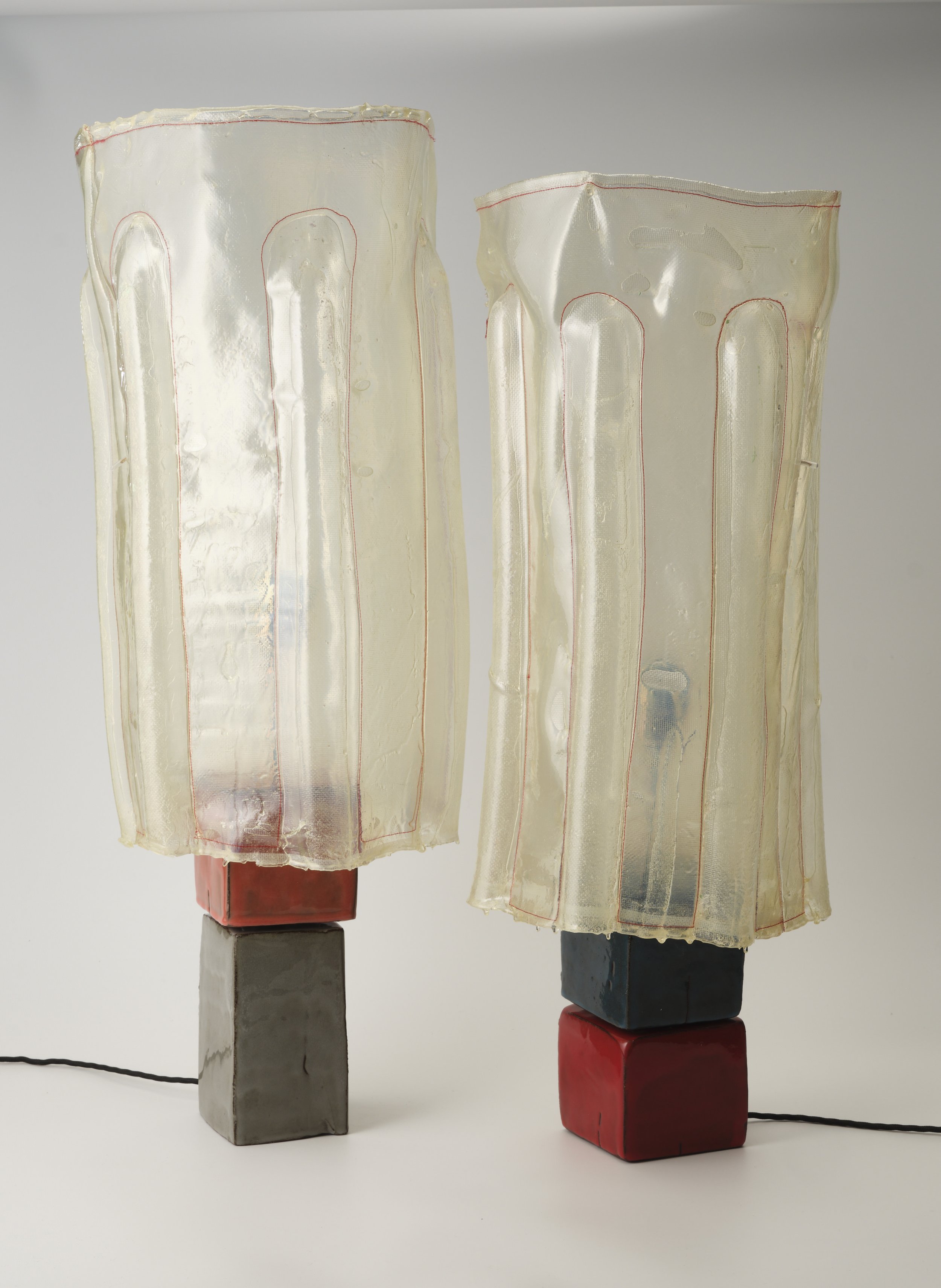
Glass fibre shades, raw waxed ceramic bases. Courtesy of the Artist.

Riberglass fabric with resin and ceramic base. Courtesy of Artist.
We The Cool: Tell us about you and your background.
Marten Herma Anderson: I'm an architect and designer by training, a sculptor and object-maker by compulsion, and a child of the Baltic coast by luck. I grew up on Rügen, chalk cliffs, grey sea, GDR prefab blocks, and I now live and work in Berlin, where I split my time between interior architecture and furniture design at Gisbert Pöppler and my own artistic practice in ceramics and collectibles. Somewhere between all of that, I also make jewelry. I contain multitudes. My mother is German, my father Syrian, and I grew up in a Plattenbau, which, as I've come to understand, explains quite a lot about my obsession with grids, repetition, and the warmth hiding inside brutalist structures.
WTC: You grew up on the Baltic island of Rügen. How did that environment shape your visual language and relationship with materials?
MHA: Rügen gave me two things that still drive everything I make: an intimacy with nature, the chalk cliffs with their visible sediment layers, the rhythm of waves, the grid of dune grasses, and a very particular kind of ambivalence. Because I didn't just grow up on a beautiful island. I grew up in a Plattenbau on a beautiful island. Every window the same. Every stairwell a copy of the last. And yet behind each one: a completely different life. I think that tension, between uniformity and intimacy, between the brutal and the tender, is maybe the most honest description of what my work keeps returning to. I didn't read the architecture as ideology. I read it as rhythm. As a grid that held my life. And somehow that grid never left me.
WTC: Your work moves between architecture, sculpture, and design. When did you realize you wanted to work across disciplines rather than within just one?
MHA: Honestly? The moment I realized I was bad at staying inside boxes, which, given that I grew up in one, is either deeply ironic or entirely inevitable. More seriously: I think I never experienced a clean boundary between these disciplines. A lamp is also a sculpture. A vessel is also an architecture. A joinery drawing is also a painting. The categories feel like administrative decisions, not creative ones. What interests me is the quality of an object's presence in a room, whether it holds light, holds memory, holds meaning. Discipline is just the method. The obsession stays the same.
WTC: Who inspires you in sculpture, design, and architecture? Any artists, designers or creatives you look up to?
MHA: I keep returning to Le Corbusier, not the dogma, but the conviction underneath it that a well-made object or space can genuinely change how a person feels. That belief in form as an act of care feels both deeply rigorous and, in the right light, almost tender. Louise Bourgeois, always. She understood that form can be an archive of feeling, that an object can hold trauma and tenderness in the same breath. I'm equally drawn to Do Ho Suh and Rachel Whiteread, who both work with something I find endlessly compelling: the ghost of a space, the cast of an absence. The idea that what's no longer there can be made more present than what is, which is very close to how I think about memory in my own work. Then there are the people who refused easy resolution: Louis Kahn, who asked what a room wants to be; Alison and Peter Smithson, who believed brutalism could be humanist; and Josef Frank, almost the opposite of all of them, who trusted pattern and abundance and joy in a way that feels quietly radical. What they share, I think, is a willingness to let longing into the work. And then there are the non-obvious references, iridescent paints from car tuning culture, the translucent wrapper of a childhood ice cream. Sometimes the most honest inspirations are the ones you're slightly embarrassed to admit.
WTC: Can you walk us through how a piece takes shape for you, from the first intuition to the final form?
MHA: It usually starts with something uncomfortably small. The way burned candy smelled on my mother's lampbulb. The translucent wrapper of my favorite childhood ice cream. A dried flower slipping out of a book. The chalk cliffs the morning after a storm. These aren't ideas exactly, more like residues. Feelings that something existed and mattered, without being able to say precisely what. Most of the time I'm either trying to preserve a memory and make it part of daily life, or I keep returning to something without knowing why, until eventually I realize there's a reason. The end result was never planned. It's a feeling that leads to something, which then slowly translates into an object, a design, a piece of art. From there it becomes a material question: what substance can hold this feeling without explaining it? I work a lot with ceramics and resin, both of which have this quality of being simultaneously fragile and stubborn. Then comes the making, which is where the piece starts to argue back. The final form is always a negotiation between the original intuition and what the material wants to be. I've learned to trust the argument.
WTC: You've said that your practice moves fluidly between disciplines, guided by a fascination with material, memory, and form. Do you start from material, memory, or use, and how does that starting point affect the final outcome?
MHA: Almost always memory, but memory in a very specific sense. Not nostalgia, not documentation. More like an atmospheric residue. A feeling that something existed and mattered, without being able to say exactly what. From that residue I find the material that shares its quality: ceramics for things that should feel like they've been kept; resin for things that should glow; flip-flop paint from car tuning culture for anything that should shift depending on where you stand, which, I'd argue, is how memory actually works. When I start from material instead, the work tends to be more formal, more architectural. When I start from memory, it tends to be more porous. More willing to let something in.
WTC: Is there a material you feel especially drawn to, and what keeps you coming back to it?
MHA: Ceramics, without question. There's something about clay that insists on being touched, it registers every decision, every hesitation. It's honest in a way that's almost uncomfortable. But I'm also increasingly drawn to materials that don't belong in fine art contexts at all. Resin, for instance. I first worked with it as a child, helping to fix a boat in spring, and that association never left. Something about its smell, its patience, the way it captures light from within. And then the iridescent liquid plastics used for alloy rims in car tuning, the so-called flip-flop paints that shift color depending on the angle of light, blue to green to gold, and carry this very specific memory of fairgrounds, of bumper cars glinting under artificial light. I find that displacement fascinating: materials designed for performance culture, pressed into service as affective surfaces. They shouldn't work. They do.
WTC: We were particularly drawn to your fiberglass lamps, can you tell us about this project?
MHA: The BumBum Lamp, named without apology after my favorite childhood ice cream. The original BumBum came in a translucent wrapper with a printed square grid pattern, and as a child I was transfixed by the way light passed through it. Years later, I found myself making lampshades by hand in resin, using boat-building techniques, layering, sanding, shaping, and realized I was essentially recreating that wrapper at 1:20 scale. The shades sit on glazed ceramic bases and function as both light source and object. They glow in a way that feels slightly alive. Despite looking almost too delicate to touch, they're structurally serious, which feels right. Most things worth keeping are stronger than they appear.
WTC: This issue centers on the idea of going Back to Basics. Does this resonate with you in any way? What does that mean to you at this point in your life and practice?
MHA: Very much, though perhaps not in the sense of simplification. For me, going back to basics means going back to the original questions: what do objects hold? What does space remember? It means making things that start with a real feeling rather than an aesthetic position. Concretely, it's brought me back to ceramics, a material I first used in art school for making architecture models that were almost sculptures in themselves. When I started working as an architect straight out of school, I felt an immediate craving to work with my hands again, to be back in that slow, physical negotiation with material. Ceramics is the most unforgiving thing I work with, and maybe that's exactly why I keep returning to it. Basics, for me, is the courage to leave something open.
WTC: What do you hope people feel when they encounter your work for the first time?
MHA: A slight confusion that resolves into recognition. That moment of: I don't know exactly what this is, but I know what it feels like. I want the work to feel simultaneously unfamiliar and oddly close, like a word in a language you don't speak but somehow understand. And if someone walks away thinking about their grandmother's garden, or a building they grew up in, or the way light moved through something they can no longer quite remember, then I'm very happy.
WTC: Are there materials or mediums you're excited to explore next?
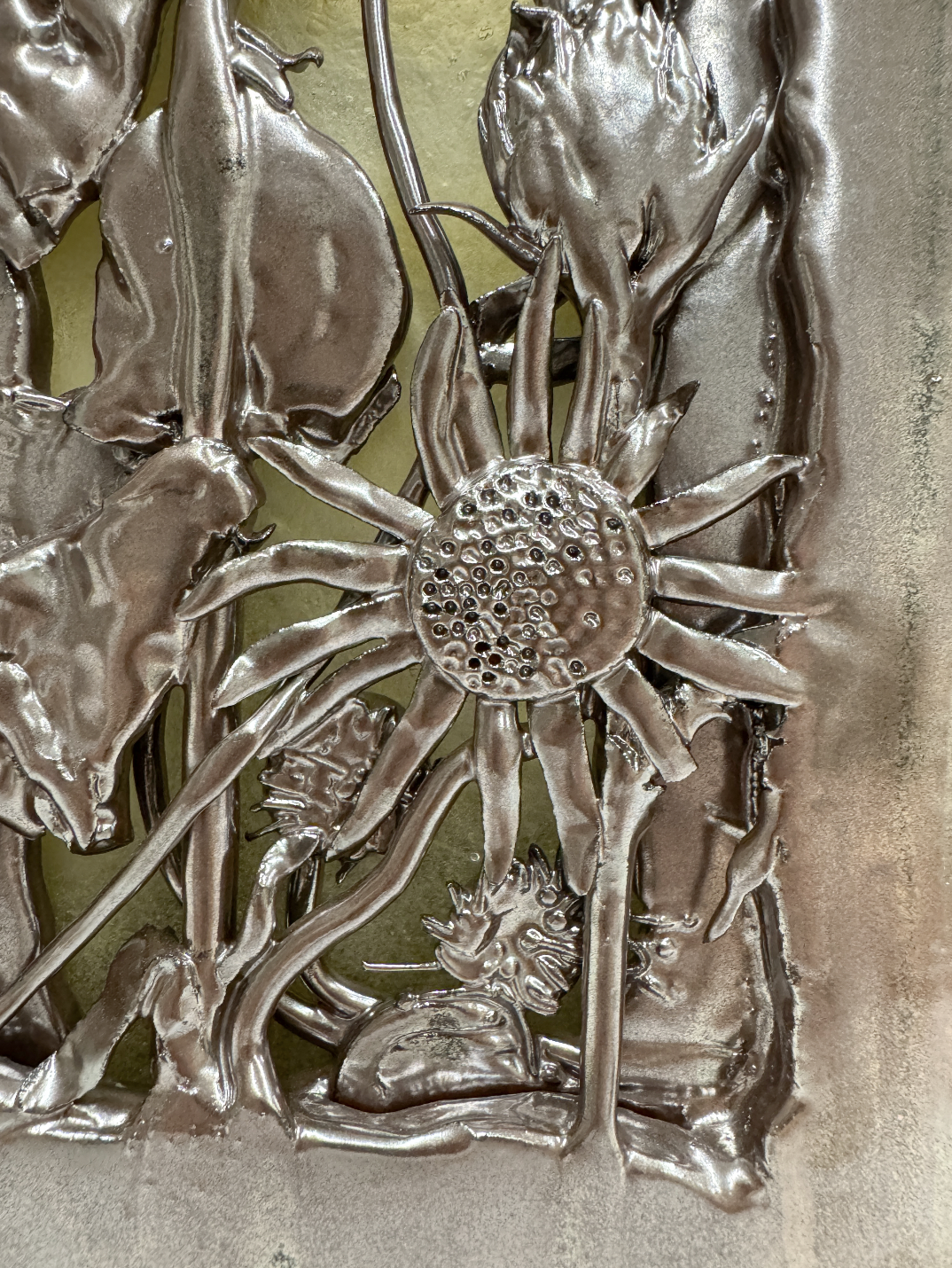
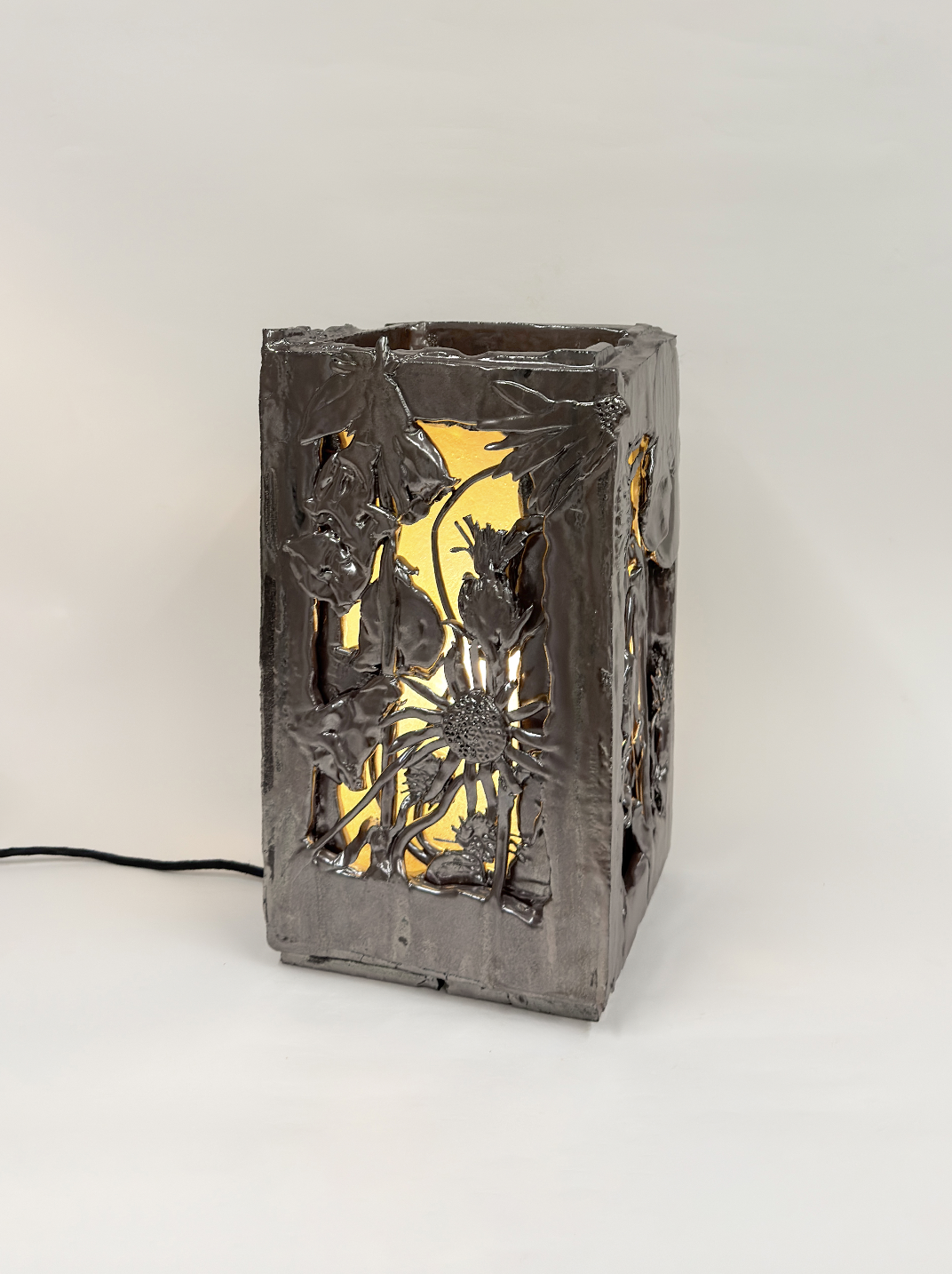
MHA: I've been thinking a lot about cast glass. It has that same quality of captured light that drew me to resin, but with a geological patience that feels right for where the work is going. I'm also increasingly interested in bronze, specifically in the relationship between a botanical form and a permanent material: what happens when something as temporary as a poppy becomes as permanent as metal? There's also a nagging interest in textile, not fabric exactly, but something structural, something woven. I'm not ready to commit yet, which probably means I'm close.
WTC: What kind of projects or collaborations would you love to pursue in the future?
MHA: I'd love to work on a facade, to take the surface of a prefab building and make it genuinely beautiful. I keep passing the murals at Alexanderplatz and feel this pull every time: that public surfaces can hold something, that architecture doesn't have to be indifferent to the people living inside it. And then, somewhere quieter: a residency with the infrastructure for large-scale ceramics, where I do nothing but make for a few weeks or months. No brief, no deadline. I'd create a garden and fall asleep in it.