
Dominic Kießling: The Movement of Space.
Working with delicate materials and simple mechanical systems, Dominic Kießling creates installations that respond to forces we often fail to notice: a shift in the air, the presence of a body, the subtle movement of space itself. The result is work that feels both minimal and alive, never entirely fixed, but continuously shaped by its surroundings. At the heart of his practice is not a desire for control, but an openness to discovery. Each piece becomes an experiment in movement, perception, and the unexpected.
We The Cool: If you had to introduce yourself for the first time to someone that doesn't know about you without using the word “artist,” what would you say?
Dominic Kießling: Hi, I’m Dominic. I’m a researcher. I’m searching for visual aesthetics.
WTC: What was the moment when you realized you wanted to be a visual artist?
DK: As long as I can remember, I felt the need to create fascination through visual art. As a teenager, I was fascinated by graffiti, later by motion graphics, now I am into kinetic installations. I never had a moment in my life, where I seriously considered doing something else.
WTC: How and why did you migrate from the digital world to a more physical one?
DK: There are many reasons. First of all it was curiosity. I love diving into new spheres. As a researcher I can’t stay very long on one point and the migration to the physical world was very refreshing to me. I worked a very long time of my life with 3D-design software, creating fantastic worlds and visual effects. I was experimenting with light and color, with surfaces, motion and all these things you can easily control in the digital world. After this kind of virtual training, it became very attractive to me to do all these things in the physical world. At the same time it turned out to be very challenging and even frustrating, if you are used to place objects by only one mouse click. A disappointment feels way stronger when you invested a lot of time and material. But the results in the real world are way more impressive and unique. That is another reason for me why I like this so much. It is pure. Nothing is hidden. Everything is understandable. I also see it as a counter movement to a world dominated by virtual reality and AI generated images. The physicality of my own body in relation to the artwork is also a very new and exciting experience for me. I love working in big warehouses for example and it feels so much more alive when you can move around your artwork in all three dimensions, rather than just sitting on a chair and looking on a screen.
WTC: Can you walk us through your creative process? Anything you can share from the moment an idea first takes shape to the materials you choose and the way the final work is brought to life.
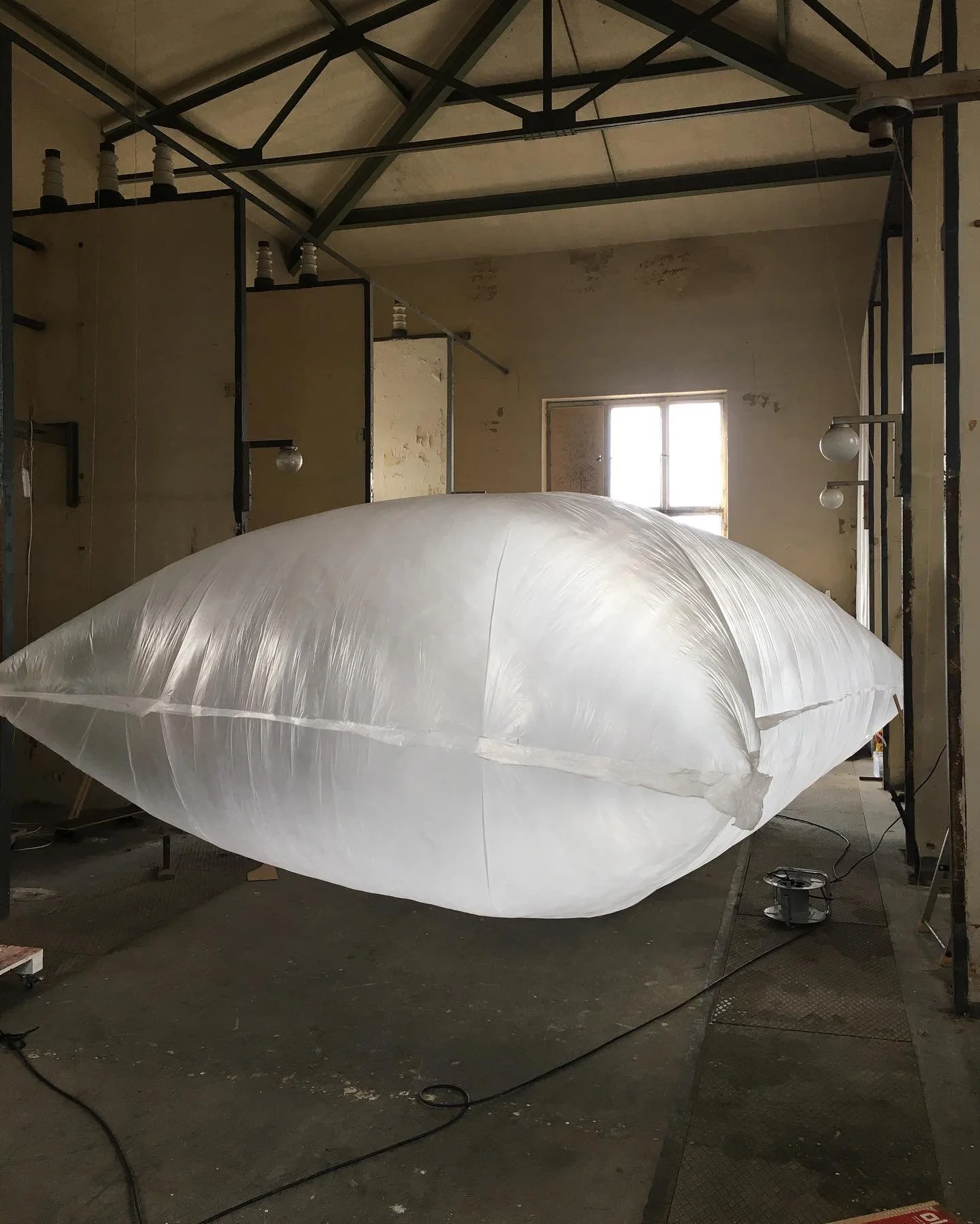
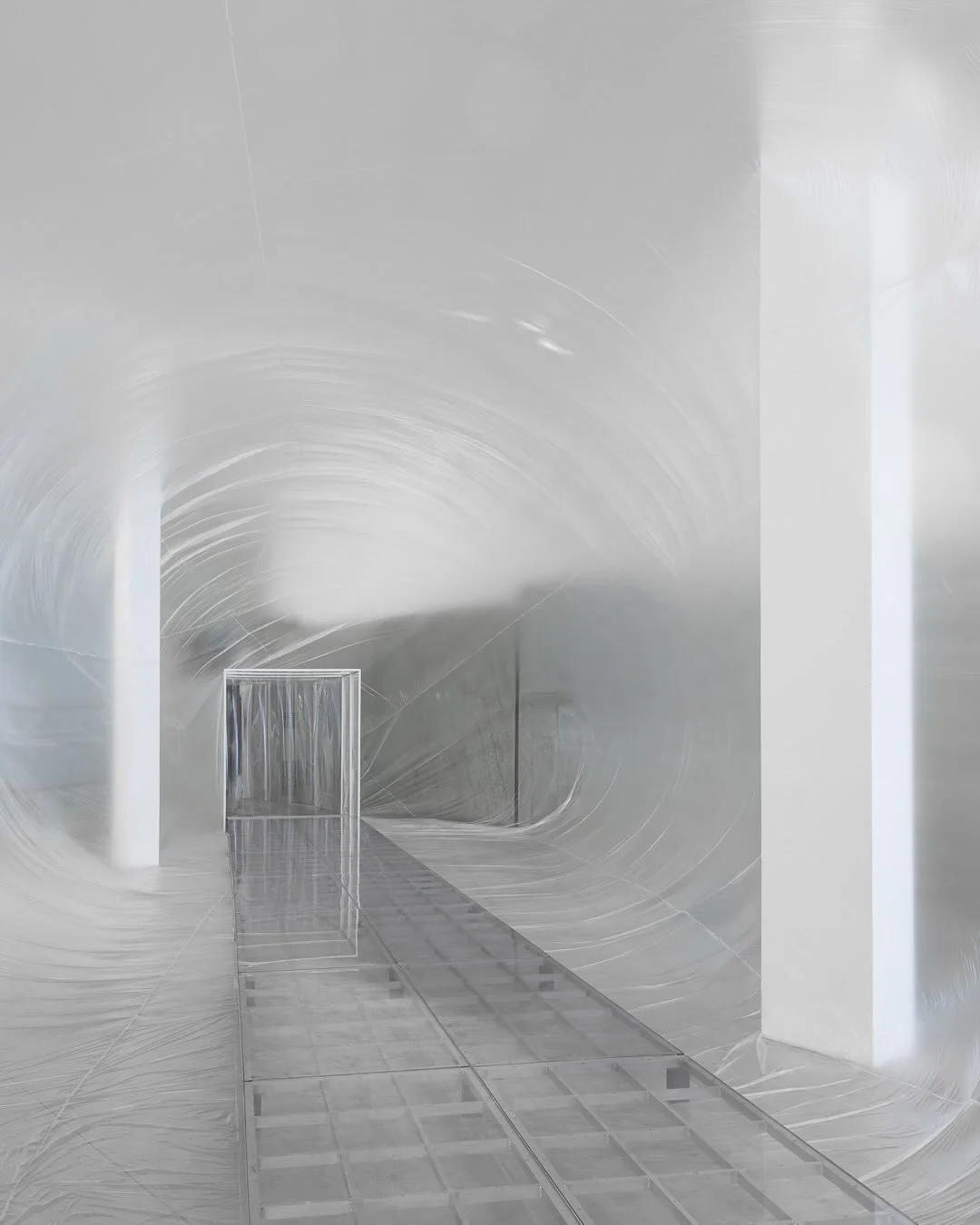
DK: At the moment I am very much into this thin foil, because it contains so many unpredictable appearances. It can be absolutely magical to play with it and it reveals new unexpected characteristic. That is the best part of my creation. Doing experiments without a certain goal, discovering new fields. I could do this endlessly. One experiment leads to many new ideas and it even feels unsatisfactory sometimes, that I can’t follow every new idea. Besides free experimenting, I also do very precise object design to turn these experiments into artworks that can be exhibited. These are two very different disciplines, which require childish openness on the one side and professional precision on the other. Regarding materials, I am very open to any kind of material. There is no boring material in the end, because it is the technique that makes a material interesting. I am sure that you can find a poetic way of manipulating each material that you find if you keep experimenting long enough, even if the result becomes very subtile.
WTC: So far, mention the most challenging project you’ve done and why?
DK: Last year I was invited by a big Chinese fashion brand to decorate their runway show with some of my installations. It was the biggest job that I ever did on my own. Also fashion shows were a very new field for me and I have never been to China before. This was a huge challenge as we were also communicating most of the time using translation software. Then we had also some critical technical problems on top. It turned out that the air conditioning in the venue was very violent and it was hard to predict how the wind will flow, when the audience is in the room. Also the heating mechanism of the installation which cause them to rise and fall started to work unreliable. But in the end we managed to solve all the problems and it became a fantastic show. That was also because of an incredibly friendly and professional team on site. Everything was so far beyond my experience that it still feels unreal when I think back on it.
WTC: What role does the human body play in activating or understanding your work?
DK: A big motivation for me to do these low tech kinetic installations was that I wanted to create fascination which can be consumed suddenly without any media or electronics. As I said, everything is pure, nothing is hidden. The art is transported directly into our eyes. Position matters. The artwork changes its shape in relation to the body in a room. That sounds very usual, but it plays an important role for me as I come from a very digital practice where everything is consumed via screens. In that sense I specially like my balloons which are activated only by the human body, so you even do not need a fan or anything else for these artworks. They are completely unplugged. And they interact so organically with the human body. It is such a huge joy for me to collaborate with all these dancers and to see how they bring my creations to life. I never intended to create objects for human performance. It happened accidentally. From a by-product it emerged to one of my strongest characters yet.
WTC: In this issue we discuss the concept or idea of going back to basics, which seems so close to the evolution of you as an artist. What comes to mind when you hear this concept?
DK: It creates a big desire. I would love to go even more to the basics as I am doing right now. Not only in my artistic practice but also in my private day-to-day life. I am very modest, I hate excess. When I see all these fast developments in technology and life-style, I have the wish to slow down everything. But this doesn’t mean that I am refusing everything. I want to be part of the world. Refusing also means isolating in a way and I don’t want to be isolated. But it’s important to be aware, that the growth of wealth on earth is very unnatural and it will destroy the planet, if we don’t slow down or forgo in a way. The idea of going back to basics can probably be taken in many directions. I also belief that a certain degree of comfort and safety doesn‘t make us happier.
WTC: What does returning to the essentials mean to you at this point in your journey?
DK: Returning to the essentials describes very good my current shift to elementary forces. The big range of my audience is telling me that by working with these elementary forces, my art is speaking a very universal language. It’s widely understandable. The material that I use is a very thin transparent foil. It is almost weightless. By forming it to a giant balloon for example, I create a capsule that is imprisoning these forces and making them visible. Our visual perception is very much designed for understanding nature. We are attracted by unknown natural phenomena. I am very happy that I discovered this field and I can‘t wait to continue my research into all these different directions which are still sleeping under the surface.
WTC: What advice would you share with young creatives and emerging artists?
DK: Though I still consider myself as an emerging artist, I know that if you are honest to yourself, you are always on a good way. It‘s important to listen to other peoples voices but in the end your decisions have to align with your own convictions. That’s integrity and to get integrity, reflexion is essential and should be cultivated to sort your experiences. A working day can be way more efficient by wandering around and cleaning up your thoughts instead of blindly continuing habits. I would not tell this only to young artists but to everyone who wants to get further.
WTC: Do you have any upcoming projects in the pipeline?
DK: I am in conversation with many curators who are planning exhibitions in very different formats. I also started a new collaboration with a dancer where we experiment together to create a new performance with my balloon objects. Maybe there will also be a new music video and a fashion show soon containing one of my kinetic installations. It is so exciting at the moment and I am very happy that I can work with so many people from different origin.
WTC: Tell us a little bit about you and your day-to-day life. Where are you based? Do you have a studio? Any favorite restaurants, galleries, bars?
DK: I live and work in Dresden, Germany. I was born here and I live with my partner and our two small kids. Besides working I have a very straight family life which is great as it is balancing me perfectly. I don’t go out in the evenings. Besides my work and my family, I don‘t need very much excitement at the moment. I hang out with old friends. I‘m searching for routines. I also have only a very small studio at the moment which is rather functional. But I have good connections to some former industrial places or dance studios which offer me fantastic opportunities for my creation. I am very much like a nomad currently which can be demanding sometimes but also builds bridges to many nice people, which I love.