Performers of Everyday Life
PANORAMMMA approaches furniture not as a solution, but as a question. Founded by artist Maika Palazuelos, the Mexico City studio creates objects that move fluidly between sculpture and function: chairs, tables, and lamps that remain familiar while introducing a subtle sense of estrangement.
Through geological materials, industrial remnants, archetypal forms, and conceptual references, Palazuelos transforms the domestic object into a vessel for memory, tension, and speculation. The result is a body of work that resists immediate clarity, inviting us to reconsider how the objects around us shape the way we think, feel, and inhabit everyday life.
We The Cool: Who is behind PANORAMMMA, and how did the project begin?
Maika Palazuelos: Panorammma was founded by me, Maika Palazuelos, during the pandemic while I was in the middle of moving apartments. At the time, I simply wanted to make furniture for myself, pieces I wished existed but couldn’t find, or whose style was far beyond my budget. What started as a personal exercise in designing objects for my own use gradually evolved into the studio.
WTC: How do you usually explain PANORAMMMA to someone encountering it for the first time?
MP: If someone isn’t familiar with the collectible design world, I usually explain that the studio creates objects that exist somewhere between sculpture and furniture. They are functional objects, but they are also conceptual in nature. In that sense, Panorammma occupies a niche where design becomes a platform for narrative, material experimentation, and speculation.
WTC: PANORAMMMA seems to sit somewhere between art, design, and experimentation. Do you see it belonging to one discipline, or existing intentionally between them?
MP: Some pieces clearly belong more to one discipline than another, but many sit somewhere in between. My background is in art rather than design, and that perspective continues to shape how I approach objects. I’ve always liked the idea that an object could retain at least a minimal usefulness, a chair that can be sat on, a table that can hold something. In a way, the practical excuse for an object’s existence felt less troubling to me than making something purely autonomous. So rather than belonging strictly to one field, the work tends to exist in a permeable space between art and design, where the conceptual intention is often shared by both.
WTC: Many of your objects feel both familiar and unexpected at the same time. How important is that tension in your work?
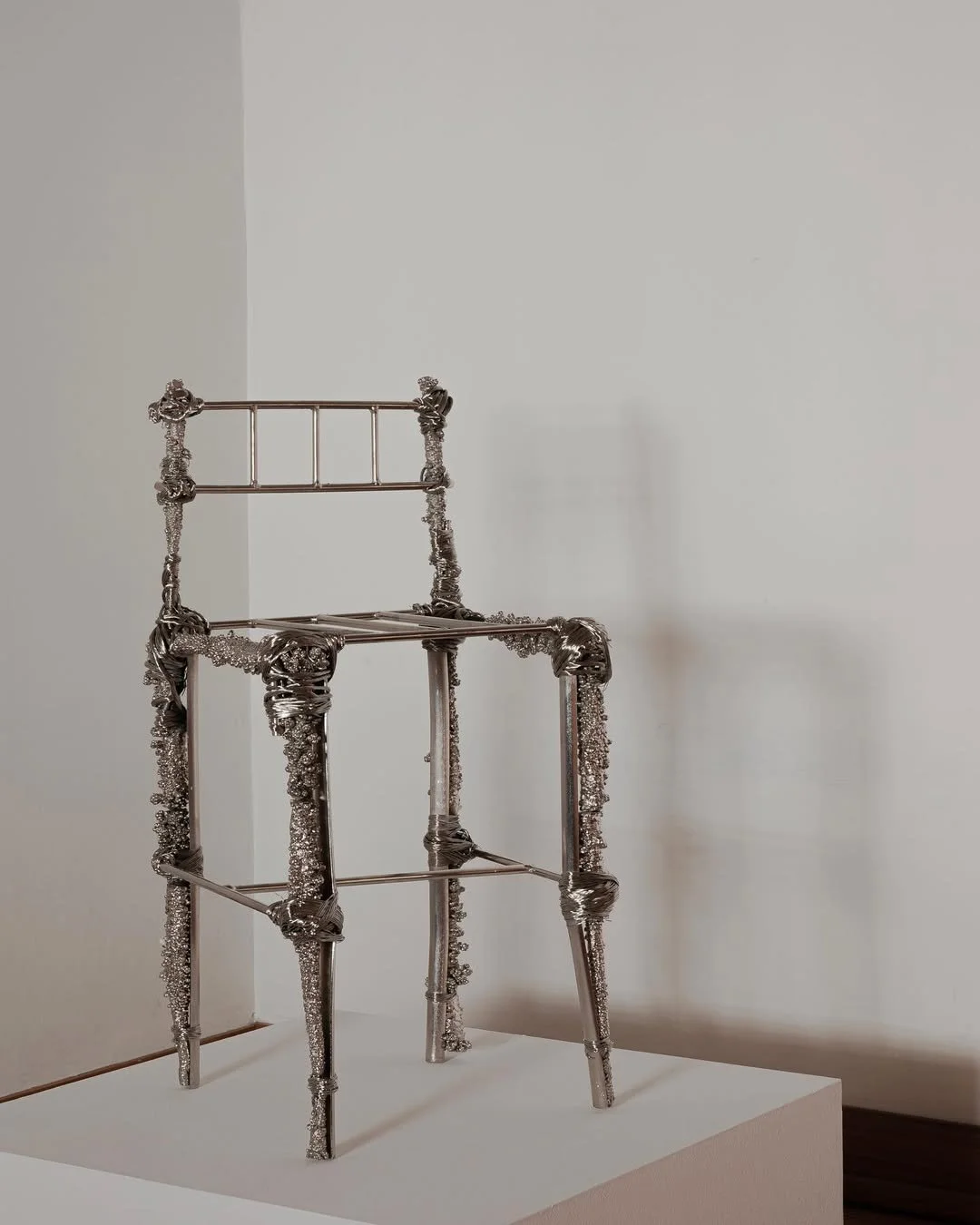
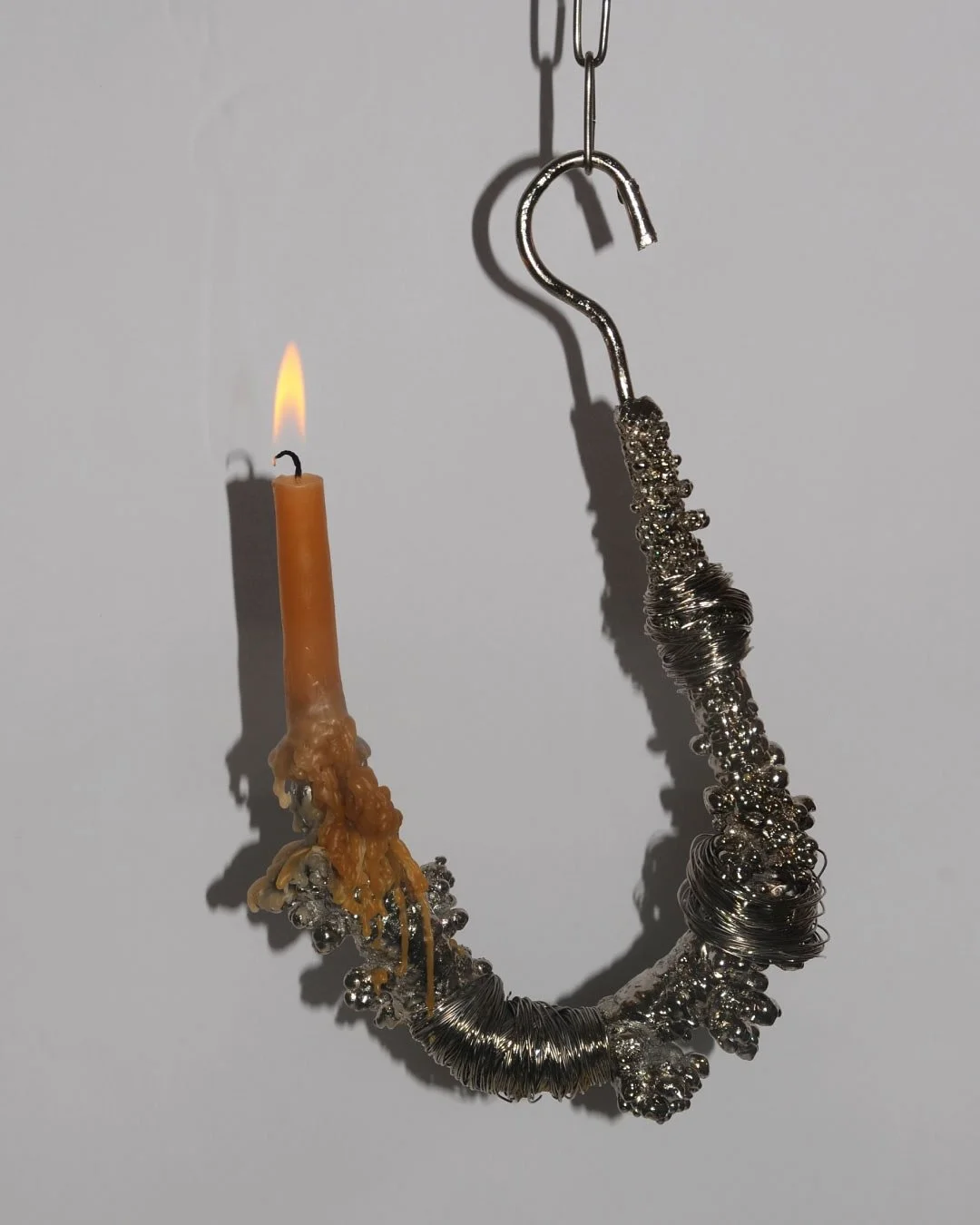
MP: That tension emerges quite naturally from working with recognizable typologies while slightly displacing them. I’m interested in objects that remain identifiable, chairs, tables, lamps, but that also introduce a subtle sense of estrangement. They point toward something familiar while withholding a full resolution. Conceptually this creates space for interpretation. Practically, it also helps the object remain legible as something usable while still operating on another level.
WTC: How did your artistic background shape the way you approach domestic objects differently from traditional design?
MP: Because my training was in art, I approach domestic objects less as solutions to problems and more as vehicles for conceptual proposals, questions, or emotional states. Rather than thinking purely about ergonomics or efficiency, I often think about what an object might evoke, what memories, associations, or tensions it can. In that sense, making furniture became a way to extend my artistic practice rather than leaving it behind. I’m interested in the topology of the object as a medium in itself, and in symbols that hint at a subject without necessarily resolving into a concrete narrative.
WTC: Your work often transforms everyday materials into something unusual. What attracts you to certain materials?
MP: Materials often act as creative triggers for me. Sometimes the entire concept of a piece emerges from encountering a material and imagining what it might become. I’m especially interested in materials that carry strong contextual associations, whether geological, industrial, or cultural. Mexico is an incredible place for this because it has an extraordinary diversity of materials and traditions. I work frequently with stone and metal, often in unconventional ways. For example, we’ve used industrial slag and chrome residues as sculptural materials. I also enjoy working with rocks that are endemic to a region, because they contextualize the object at a geological level. Working with stone, in particular, feels almost archaeological.
WTC: Where does a PANORAMMMA object usually begin: with an emotion, a critique, a gesture, or a practical need?
MP: It can begin in many different ways. Sometimes it starts with a material, sometimes with an abstract idea, a philosophical reference, or even a song. But many pieces ultimately connect back to an attempt to materialize and decipher certain experiences, particularly those related to memory and perception. My practice often follows a cyclical process: working on one object tends to generate the idea for another.
WTC: What kind of presence do you hope PANORAMMMA objects have in people’s lives over time?.
MP: Ideally, they are objects that people can live with over time while continuing to discover new meanings in them. Rather than providing clear answers, they should invite contemplation and maintain a certain ambiguity that sparks thought.
WTC: What questions are currently driving the project forward?
MP: One of the main questions concerns how objects can challenge the growing sense of abstraction and alienation in contemporary life. I’m interested in whether design objects can introduce moments of reflection or disruption within everyday environments. Where is the breaking point for this?How much comfort are we willing to sacrifice for it? Another ongoing curiosity is how materials themselves can guide the conceptual direction of a project.
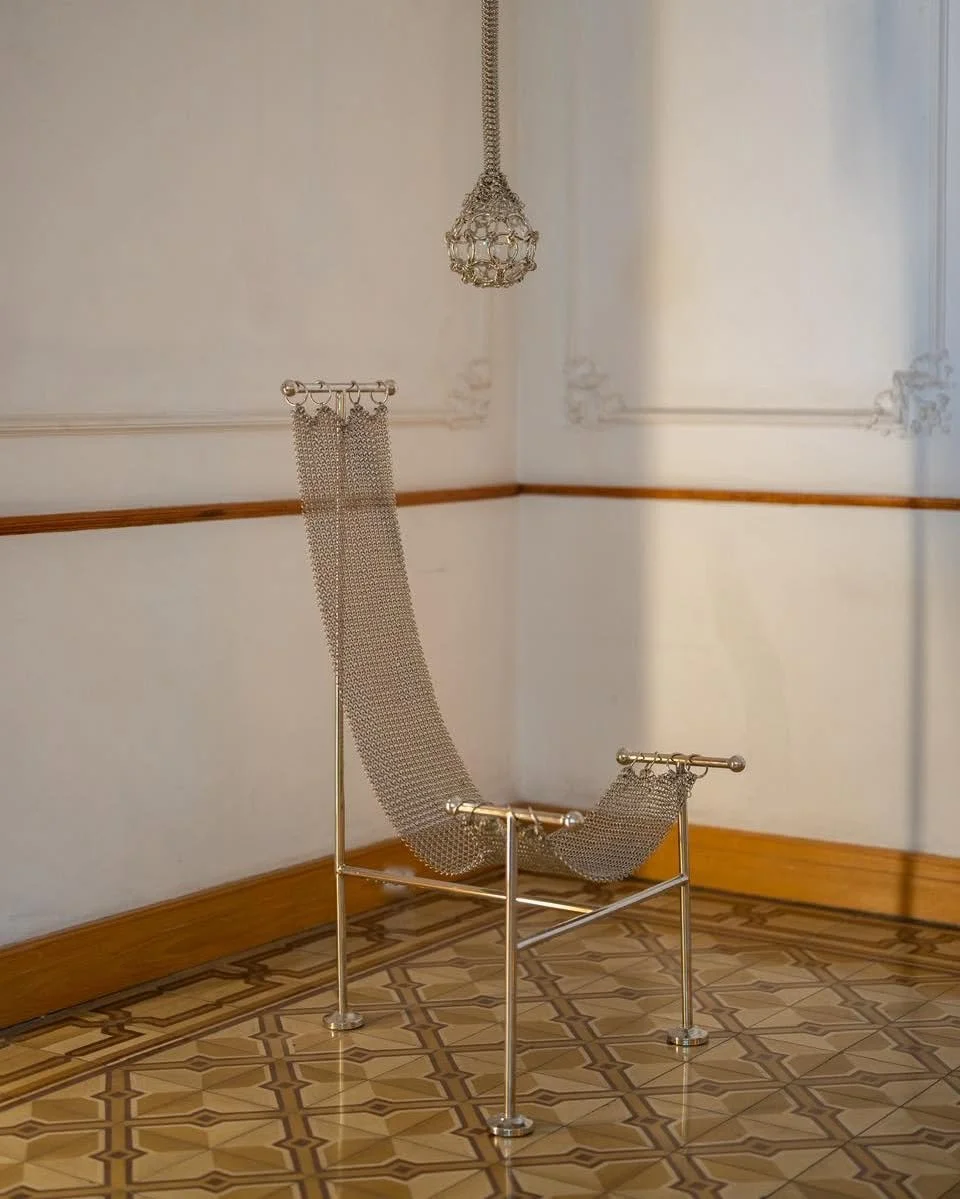
WTC: We love your Chainmail Chair. Tell us about this object and how it came to be.
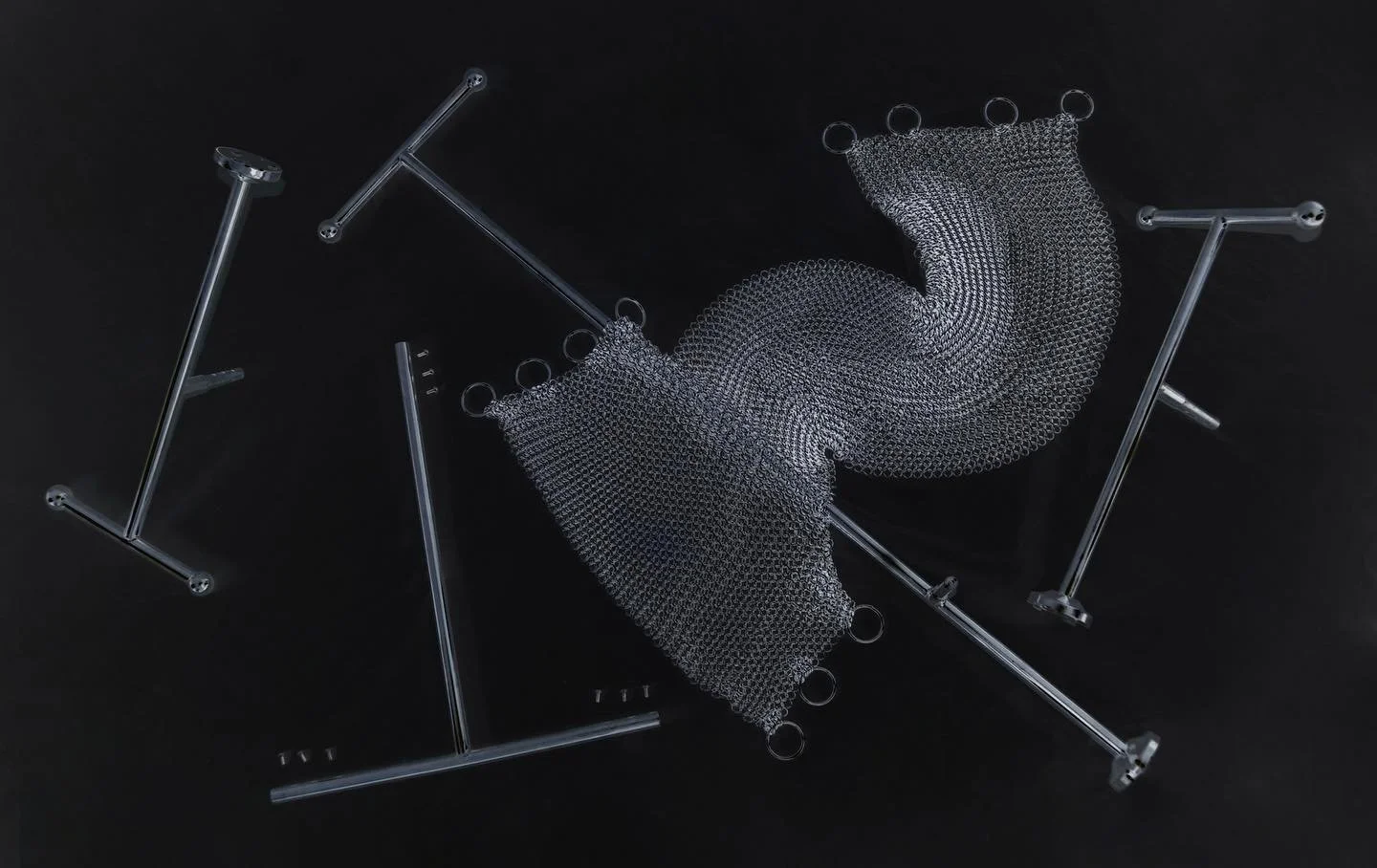
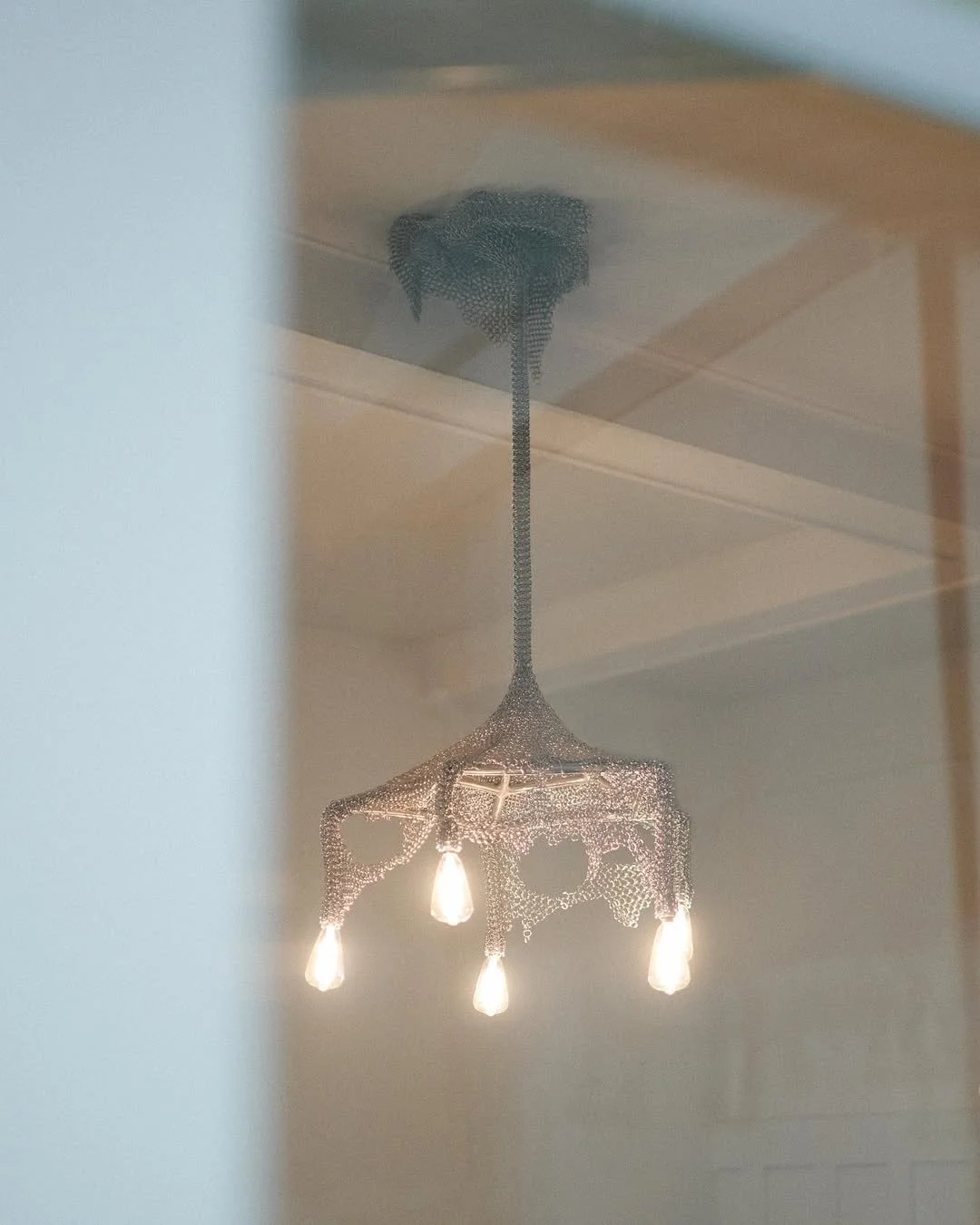
MP: The Chainmail Chair emerged from an interest in the symbolic complexity of chainmail as a material. It consists of thousands of steel rings hand-linked together to create a mesh that behaves almost like fabric. Historically, chainmail was used as armor associated with protection, grandeur, and victory but it also carries connotations of violence, restraint, discipline, and even bondage. For the chair I was thinking about Félix Guattari’s concept of the “body without organs” a body open to multiple sensations and expressions, including pleasure, pain, and pleasure in pain. Presenting chainmail in the form of a chair, almost like a throne, allows those associations to surface and be questioned simultaneously. Its visceral reference to BDSM was also of great interest to me, since that practice exists in a liminal space between theatricality and reality. In a way, this is what I hope my objects become “performers of everyday life”.
WTC: This issue is about “Back to Basics.” Does that concept resonate with what you do?
MP: It does. Many of my works begin with very simple gestures, basic materials, fundamental structures, or archetypal forms like chairs or tables. But instead of stripping things down for purity, I’m often interested in returning to foundational ideas in order to reinterpret them through contemporary narratives.
WTC: What projects are on the horizon for 2026?
MP: We’re currently working on several new pieces, but perhaps most excitingly we’re expanding more deeply into interior design. It’s a fascinating arena in which furniture, space, and atmosphere interact, many more elements are at play. Tell us about a day in your life. My days are usually quite unpredictable. Much of my time is spent moving around Mexico City visiting different workshops to supervise production and discuss technical solutions with collaborators. In the studio we review drawings, experiment with materials, and discuss new ideas with the team. Outside of work I enjoy running in nearby forests and sketching ideas afterward. And there is almost always coffee involved somewhere in the process. Whenever I can, I try to leave the city and spend time in nature. My wish is to one day live outside the city, in the countryside and manage Panorammma from there, although it’s not yet clear when that might happen.
WTC: What is something about design today that you would like to question or disrupt?
MP: I think it’s important to question the increasing pressure for design to produce immediate clarity or utility. I would like to see more room for uncertainty, experimentation, and narrative within design. At the same time, we need to think more seriously about environmental repercussions, and about the role objects play in shaping social relationships, whether they isolate us, bring us together, or do something in between.