
JONALDDUDD and the Case for Accessible Design
Relevance in design today is less about spectacle and more about intention. When I first encountered Chris Held’s work at “Shelter” (a new design fair created by online collectible design market Afternoon Light) it carried a quiet conviction—objects that didn’t beg for attention, yet refused to be ignored. That sensibility extends beyond Held’s individual practice. It lives within JONALDDUDD, the long-running group show he co-founded, and Dudd House, a Philadelphia-based collective redefining how designers show, sell, and sustain their work. Our conversation traced nearly two decades of collaboration, experimentation, pause, and rebirth—revealing a philosophy grounded in accessibility, trust, and community rather than prestige alone.

Sean Kim, Squiggle Lamp, Recycled PETg, Aluminum, TPE Cord, 58”H x 15” D, NFS.
The Origins of JONALDDUDD
JONALDDUDD began not as a brand, but as a response. Chris Held met Lydia Cambron in Oregon, where the two collaborated on furniture and small-scale events. As their practices evolved and conversations turned toward platforms like New York Design Week, frustration set in. The commercial barrier to entry felt misaligned with the design scenes they admired internationally—particularly within fine art communities, where group shows were more accessible, experimental, and socially driven.
The question emerged naturally: Why couldn’t design operate the same way?
That question became the foundation of JONALDDUDD—conceived as a group show prioritizing inclusion over polish and dialogue over hierarchy. Graphic designer Ben Garthus joined early on, helping produce the first two shows. What began as a one-off experiment quietly evolved into a decade-long project.
A Platform That Refuses to Calcify
Over ten years, JONALDDUDD has staged eight shows, each treated as its own ecosystem rather than part of a fixed formula. Cambron remained involved until 2021, after which the project entered a period of dormancy. Its return in 2024 marked a significant shift—not only structurally, but philosophically. Held introduced a guest curator model, inviting Charles Constantine and Tim Monaghan to shape the exhibition. The move signaled a willingness to relinquish control in favor of new perspectives.
“I had to reassess what the show could be without trying to preserve what it used to be,” Held shared. “Letting go became part of its survival.”
That openness mirrors the broader evolution of independent design platforms—spaces increasingly defined by flexibility, collaboration, and honesty rather than permanence or scale.


From left to right: Hand-shaped douglas fir Bullhorns by @spacecraftpdx. See Earth by SAW.Earth – a series of handmade lamps. Booth at @collectiblefair with designers @carldurkow, @realm.obj & @youthofthebeast
Dudd House: An Alternative Model
If JONALDDUDD is a temporary gathering, Dudd House is its permanent anchor. Based in Philadelphia, Dudd House operates as both a showroom and a members collective, intentionally pushing back against the demands often placed on small studios by traditional galleries.
Rather than requiring large quantities of new or exclusive work, Dudd House invites members to show less. Work doesn’t need to be recent. The commission structure is smaller. The pressure is lighter. The emphasis is on sustainability and mutual respect.
Many founding members were artists Held had previously collaborated with through JONALDDUDD, creating a foundation built on trust. The result is a space that feels less transactional and more communal—an alternative path for designers navigating the uncertain space between graduation and gallery representation.
Rooted in Philadelphia
Held’s move from New York to Philadelphia marked another quiet rebirth. While the transition temporarily paused his personal collections, it allowed space for JONALDDUDD and Dudd House to take shape more intentionally.
Philadelphia, he explained, offers something increasingly rare: affordability paired with a deeply engaged design community. Rather than chasing external validation, Held has focused on building local relationships, including partnerships with institutions like the Philadelphia Museum of Art.
Though Dudd House draws visitors from New York and Los Angeles, its core remains local—proof that meaningful platforms don’t need to orbit traditional capitals to matter.
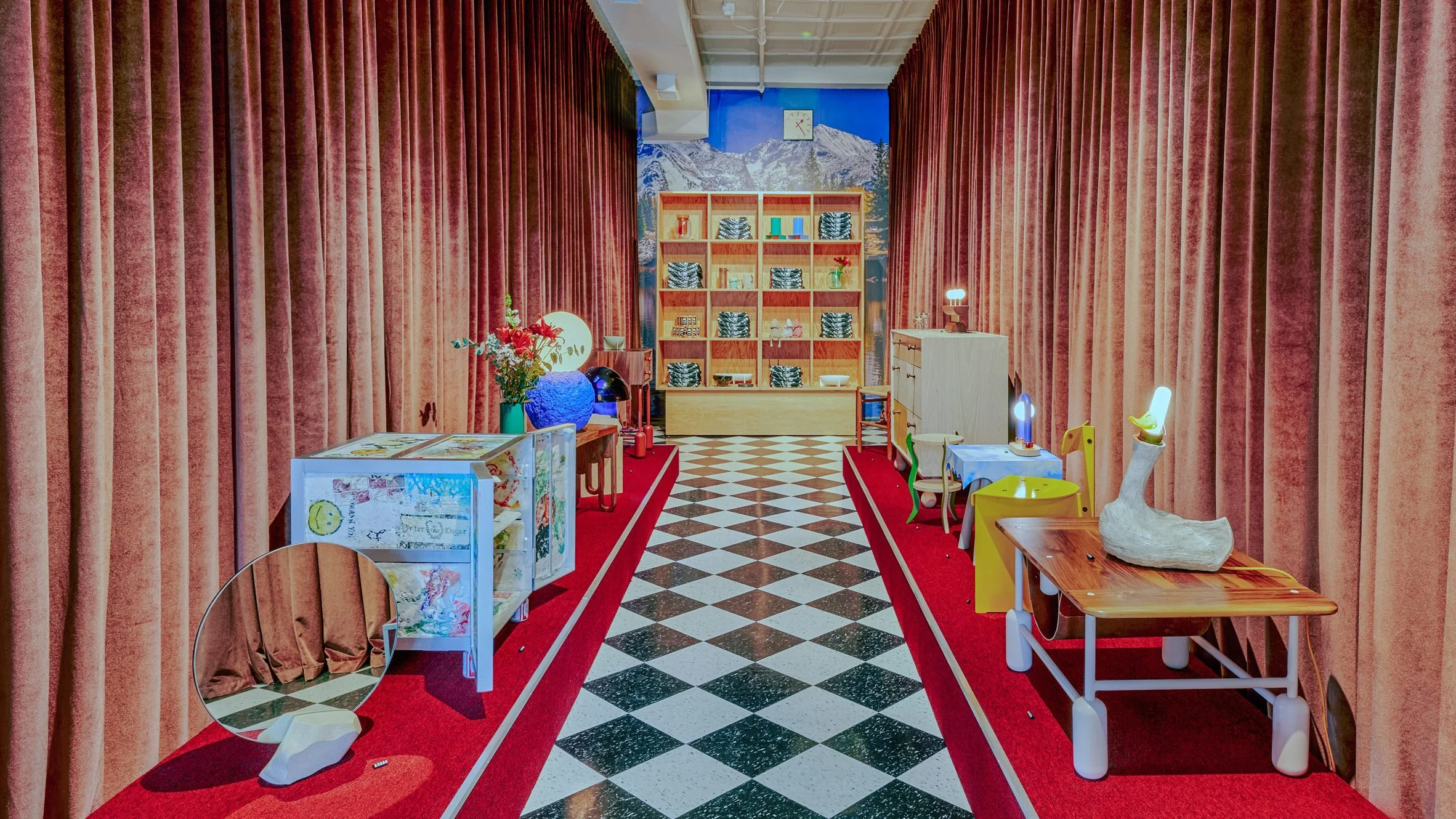
Philadelphia gallery Dudd Haus.
Humor, Identity, and the Name JONALDDUDD
The name JONALDDUDD originated from a misheard word and was embraced for its absurdity. The humor was intentional. Where much of the design world leans toward rigidity and reverence, JONALDDUDD introduced levity.
Early visual references to Donald Judd prompted concerns from the Judd Foundation, leading to a change in branding. Still, the playful spirit remained intact: a conscious contrast to the seriousness that often dominates collectible design.
“It was never about parody,” Held explained. “It was about permission—not taking ourselves too seriously.”


Left: Egg Cups by @carldurkow Materials- Stainless SteelDimensions- 3.5W x 3.75H - 3.25W x 4.5H inches Right: THIS IS NOT A STRUT, a group exhibition with 21 @DUDDHAUS members
Looking Ahead
The future of JONALDDUDD is less about expansion and more about depth. Dudd House remains the priority: growing its membership, creating opportunities, and proving that alternative models can be both viable and impactful.
At its core, the mission is simple—lower the barriers that keep talented designers from being seen. Traditional galleries, expensive booths, and opaque systems often delay or derail creative careers. Dudd House exists to bridge that gap with transparency, generosity, and collective momentum.
Advice for Emerging Creatives
For young artists and designers, Held’s advice is grounded and clear: embrace your voice, resist trend-chasing, and understand where your work fits within the broader market—whether conceptual, luxury, or collectible.
Equally important is presence. Showing up for peers, supporting others’ work, and contributing to the community aren’t optional extras—they are the infrastructure that sustains creative ecosystems.
A Continuing Rebirth
Reflecting on rebirth, Held pointed to Lydia Cambron’s departure from JONALDDUDD as a pivotal moment—one that forced reassessment and change. The guest curator model, the evolution of Dudd House, and his own ongoing challenge with delegation all point to the same truth: growth often requires release.
JONALDDUDD doesn’t present itself as an answer, but as an ongoing question—one that continues to adapt, invite, and evolve. And perhaps that is its greatest strength.
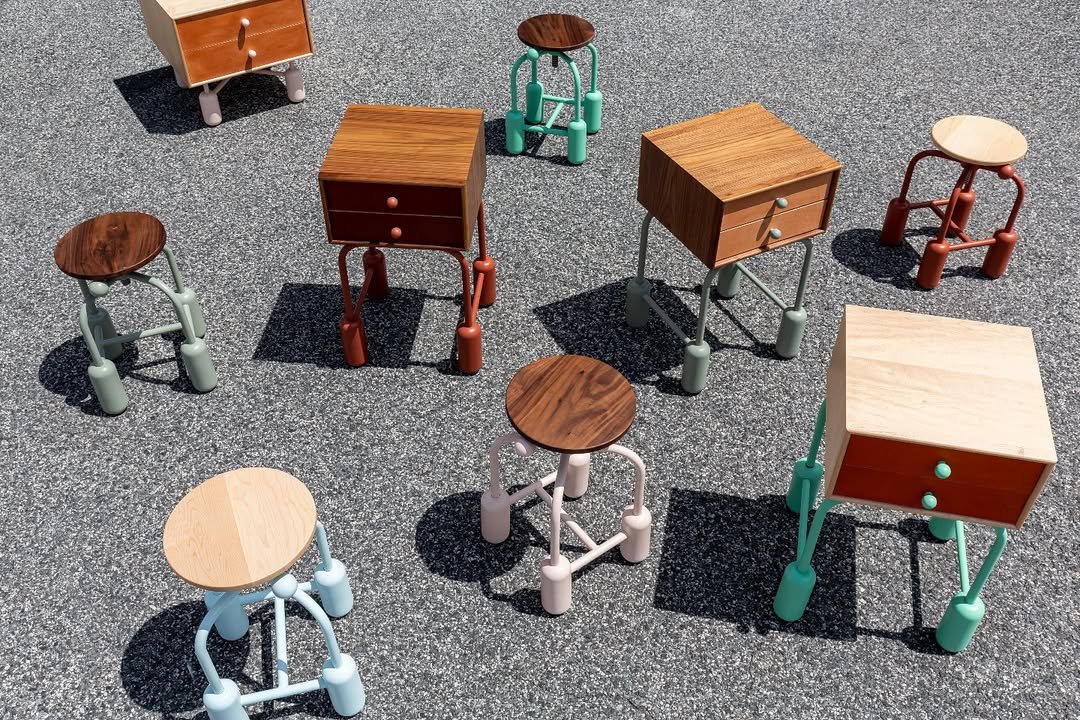
@koba.furniture in the DUDD HAUS roster.