
The Strange Intimacy of Being Known
A conversation with Body Type's Cecilia Coleman on their new album Tally, creative partnership, and finding magic in the everyday.

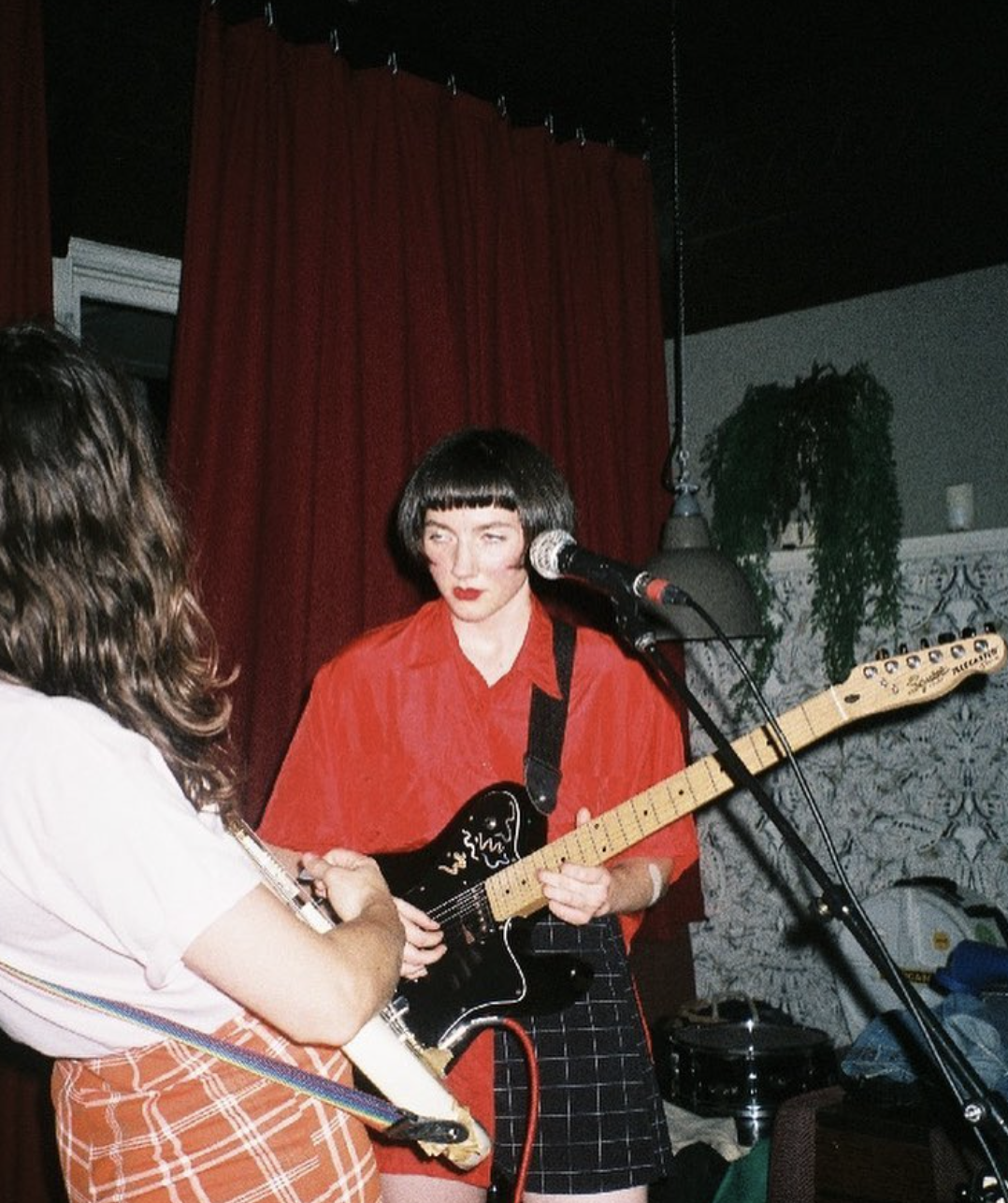
Listening to Tally, I kept returning to the same thought: some records ask you to escape reality, while others reveal just how strange reality already is. Across the record, Body Type have a remarkable ability to make ordinary moments feel quietly uncanny. Chasing a friend who owes you money becomes a meditation on loyalty, stepping into an aging elevator feels almost mythological, and asking for reassurance turns into something far more unsettling. It's an album that finds magic in the mundane, where everyday life brushes up against fantasy without ever losing sight of its emotional truth.
Released as the Australian four-piece celebrates ten years together, Tally feels less like a milestone than a reflection. The urgency that fueled their earlier records has softened into something more expansive, making room for curiosity, humor, and vulnerability without losing the jagged energy that has defined the band since its beginnings.Produced by Warpaint's Stella Mozgawa, Tally is their most textured and assured work to date. But what stayed with me wasn't the production—it was the relationships at its core.
When I spoke with drummer Cecilia Coleman, our conversation quickly moved beyond the mechanics of making the record. Instead, we found ourselves talking about creative survival, the strange intimacy of spending a decade alongside the same people, and how the smallest moments of everyday life eventually find their way into song.
Ten years together
Ten years is a long time for any relationship to survive, let alone one built on friendship, business, creativity, and the countless compromises that come with being in a band. When I ask Cecilia Coleman what Body Type has had to let die in order to make it this far, she laughs before answering.
"So many things."
It's an honest response, and one that quickly moves beyond the practical sacrifices of balancing careers outside the band. Instead, Coleman reflects on the expectations they've learned to leave behind.
"One thing that's been really good to let die is everyone's expectations," she says. "Learning to tell those expectations to fuck off, setting boundaries for ourselves, and not being frustrated by people dictating the path of our career."
After a decade together, that perspective feels hard-earned. Body Type has grown from what Coleman affectionately describes as "this scrappy band still learning to play our instruments" into one of Australia's most compelling rock bands, but she doesn't frame that evolution in terms of success or milestones. Instead, she talks about trust.
"It's been about choosing to work with the people we work with and not working with fuckers," she says with a laugh.
Learning to let go
If the first decade of Body Type was about learning who they were together, Tally marks the first time they invited someone else into that process. Recorded in Los Angeles with Warpaint drummer and producer Stella Mozgawa, the album became a lesson in relinquishing control—something that doesn't come naturally to Coleman.
"I'm such a perfectionist," she admits. "My background is classical music, so I'm always, 'Again, again, again, again.'"
Mozgawa's role wasn't to reshape Body Type's identity, but to recognize when something was already working. Sometimes that meant encouraging another take, but just as often it meant knowing when to stop searching for perfection.
*"She was really good at saying, 'You don't need to do it again,'" Coleman recalls. "Sometimes less is more."
That philosophy quietly reshaped the record. On "Eye Is A Mouth Is A Face," Mozgawa suggested changing the time signature halfway through the song, completely altering its momentum. Elsewhere, Mellotrons, synths, bongos, and subtler production flourishes found their way into Body Type's sound—not as decoration, but as ways of creating space.
"She was really good at finding space," Coleman says. "It's so hard when it's just the four of us in a room working through songs. Having someone there to navigate that was amazing."
Rather than making the band sound different, Mozgawa helped them sound more like themselves, trusting restraint where they might once have pushed harder.
Finding magic in the everyday
The more we spoke, the more I realized Tally isn't interested in escaping everyday life—it's interested in paying closer attention to it. Throughout the album, ordinary experiences quietly slip into something stranger. A friend who owes you money becomes the subject of a dryly funny reckoning. An aging elevator feels strangely cinematic. Even asking someone to reassure you becomes an exploration of self-doubt and desire.
Listening to the record, I couldn't help but think about artists like Louise Bourgeois, who found profound emotional weight in the everyday. While our conversation didn't dwell on her influence directly, Body Type seems drawn to a similar kind of transformation: revealing the extraordinary already hidden within ordinary life.
For Coleman, though, that process isn't something the band consciously sets out to achieve—it's simply how they experience the world around them.
"Annabel has this incredible ability to turn a really inane experience into this very dry and comedic song about someone owing you money," she says. "Honestly, that's just her sense of humor."
The same goes for bassist Georgia Wilkinson-Derums, whose lyrics drift effortlessly between the tactile and the surreal. But what fascinated me most was hearing Coleman describe what it's like to witness those songs being born—not as a listener, but as someone who has lived through the moments that inspired them.
"We're so close that I get to watch the girls live their lives," she explains. "Then I see those experiences morph into songs. Sometimes I've had the experience too, and then later I hear it transformed into music. That's a really unique position to be in."
That idea feels like the quiet heartbeat of Tally. The record doesn't search for meaning in extraordinary events; it uncovers it in the overlooked rhythms of everyday life. Its songs remind us that the mundane is rarely as ordinary as it first appears.
The strange intimacy of being known
If Tally repeatedly returns to moments of emotional uncertainty, it's because so many of its songs are asking something of another person. Reassurance. Vulnerability. Affection. Honesty. Again and again, the album circles the complicated desire to be understood while quietly questioning whether we ever really believe what other people tell us about ourselves.
One lyric stayed with me long after the record ended. In "And What Else?", the narrator pleads, "Tell me things I don't believe about myself." It feels like one of the album's most vulnerable moments, so I ask Coleman whether being truly known by another person is ultimately comforting or terrifying.
She doesn't hesitate.
"It's 100 percent both."
She laughs as she describes the games the band plays on tour, assigning each other fictional characters or debating which Beatle or Spice Girl everyone would be. Beneath the humor, though, is something surprisingly revealing.
"These three women know me," she says. "It's like mannerisms, text message lingo, emotions... Sometimes they'll point something out about me and I'll think, 'I didn't know that about myself.'"
That kind of closeness, she explains, comes with its own contradictions.
"Sometimes you're like, 'I just wish you didn't know this about me.' But then, when you need it, they're the first people to know something's up. It's such a support network."
It's impossible not to hear that same tension echoing throughout Tally. The album repeatedly explores the fragile space between wanting to be seen and wanting to protect the parts of ourselves that feel unknowable. Perhaps that's why these songs resonate so deeply: they understand that intimacy is rarely simple. To be loved is also to be witnessed, and sometimes those are the very same thing.
As Coleman reflects on the band's dynamic, she lands on the description that feels most fitting.
"They're like sisters. It's unconditional. But they're also my best friends, my business partners, and my creative partners."
For a band celebrating ten years together, that's no small achievement.
Everything counts
Toward the end of our conversation, I found myself returning to the album's title. After talking about creative partnership, songwriting, and the strange ways everyday moments become songs, one question still lingered: after ten years together, what exactly is Tally counting?
Coleman laughs before answering.
"We've joked about tallying the amount of boyfriends we've had since the band started," she says. "But I think it's really just a celebration of us."
It's a deceptively simple response, but one that quietly reframes the record. Throughout our conversation, Coleman rarely spoke about success in the traditional sense. She wasn't interested in streaming numbers or career milestones. Instead, she returned again and again to the people around her: the friendships that have survived a decade, the trust required to let someone reshape your songs, and the privilege of creating alongside people who know you so well they sometimes reveal parts of yourself you hadn't yet recognized.
Before we wrap up, I ask one final, lighter question. If Tally existed somewhere beyond music—if it were a film or a book—what would it be?
Coleman smiles.
"Probably Mulholland Drive mixed with Joan Didion's The White Album*,"* she says. "Maybe a bit of Frank Lloyd Wright... and Joni Mitchell."
It's a fitting answer. Like David Lynch's Los Angeles or Didion's essays, Tally exists in that uncanny space where the familiar begins to feel slightly off-kilter, where ordinary moments shimmer with unexpected meaning.
Maybe that's what stayed with me most after listening to the album—and after speaking with Coleman. Some records ask us to escape reality. Tally asks us to pay closer attention to it. To the people who know us best. To the quiet rituals that shape our days. To the awkward conversations, the debts, the reassurances we struggle to believe, and the strange beauty hiding inside the ordinary.
In the end, perhaps that's what Body Type have been tallying all along.